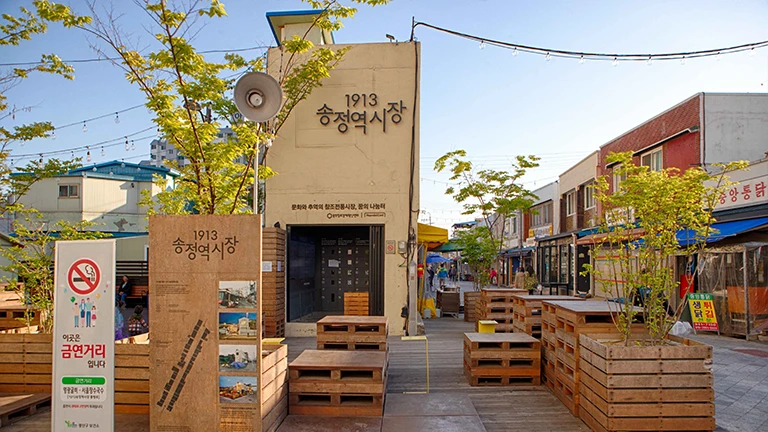
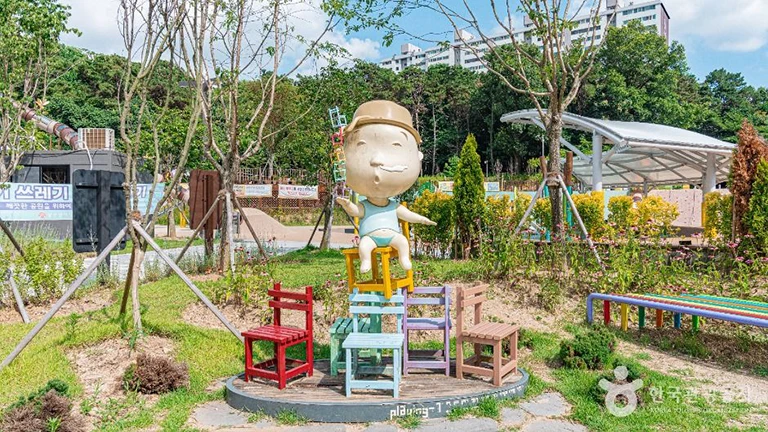
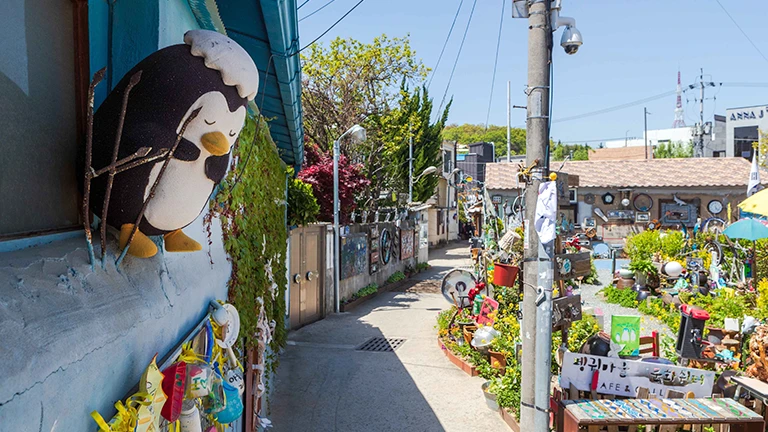
The Songjeong Daily Market, located in the alley across from KTX Gwangju Songjeong Station, has been newly renovated. Each shop features a sign with beautiful lettering that reflects its long history. Foods typically associated with traditional markets, such as neighborhood hotteok (sweet pancakes), skewer stalls, egg rice, fish cakes, croquettes, and red ginseng yogurt, stimulate both the eyes and nose. At the noodle factory next to Tofu Village, you can also enjoy banquet noodles (janchi-guksu) for just KRW 1,000. Calendars and notebooks featuring traditional Jeolla-do dialects are especially popular items. The Songjeong Daily Market, which has shared its history with Gwangju Songjeong Station since 1913, is a historic traditional market with over 100 years of heritage. Once bustling with customers seeking ingredients and daily necessities, the market gradually declined after the 1990s due to the rapid rise of large supermarkets, much like other traditional markets. Songjeong Station Market chose "time" as the heritage worth preserving by acknowledging the differences between traditional markets and large supermarkets, and pursuing changes to strengthen the unique characteristics of traditional markets.
Travel TimeApproximately 20 minutes by car
Gwangju Biennale Exhibition Hall
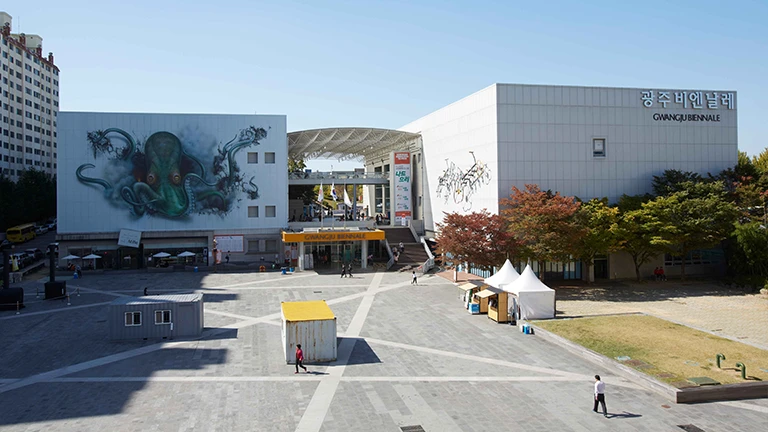
Since its establishment in 1994, the Gwangju Biennale Exhibition Hall has hosted numerous exhibitions, making significant contributions to Korean and global art culture. The Biennale strives to bring joy and vital energy to people’s lives while serving as a gateway for Korean artists to step onto the world stage. The exhibition doesn't end as a one-time event but continuously makes a variety of efforts to become a sustainable platform that enhances the regional value of Gwangju as the home of the Biennale. In response to the COVID-19 pandemic it also provides online access, allowing citizens unable to visit in person to experience the unique services provided by the exhibition. During the Gwangju Design Biennale exhibition periods, various events, exhibitions, and hands-on experience programs take place. These include the main exhibitions, special exhibitions, as well as international academic events.
[Source - Korea Tourism Organization:https://korean.visitkorea.or.kr/main/main.do]
Travel TimeApproximately 20 minutes by car
Mudeungsan National Park
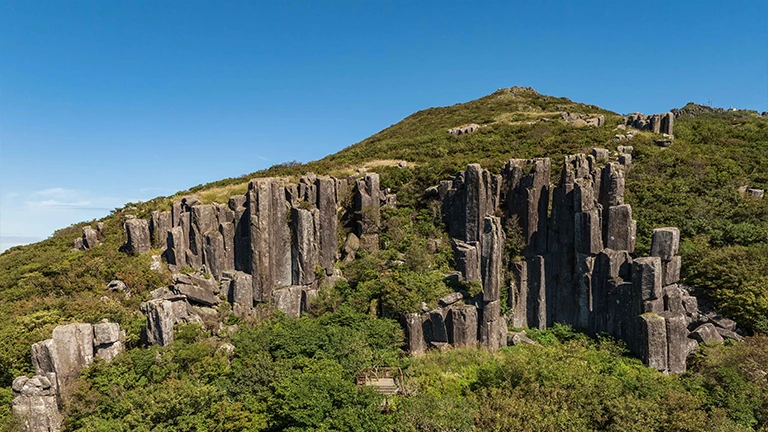
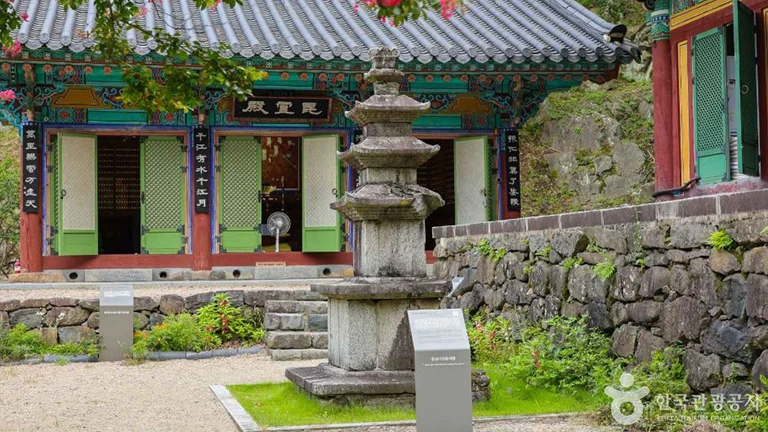
Designated as a national geopark and UNESCO Global Geopark, Mudeungsan National Park covers 75.425 ㎢ with an elevation of 1,187 meters, spanning across Gwangju, Damyang, and Hwasun. The park boasts 61 natural scenic landmarks, including the hexagonal-shaped rocks known as Seoseokdae and Ipseokdae, and other distinctive rock formations. Mudeungsan National Park embraces everything Gwangju represents - the hexagonal-shaped rock columns called "God's Stone Columns," the thousand-year-old temple Jeungsimsa (Gwangju Cultural Heritage No. 1), the Gasa Literary Culture Region filled with the essence of the Joseon Dynasty Gasa literature, the Umlim-dong Art Museum where the soul of arts and culture resides, and Wonhyosa Temple, nestling in the mountains of Wonhyo Valley. The park, located in downtown Gwangju, attracts countless visitors throughout all of the seasons.
[Source - O! My Gwangju Tourism:https://tour.gwangju.go.kr/home/main.cs]
Travel TimeApproximately 30 minutes by car
Jeungsimsa Temple
As one of the best-known temples of Gwangju, it has the longest history in the region.
It houses the Iron Seated Vairocana Buddha (Treasure No. 131) and the Stone Standing Bodhisattva Statue (Tangible Cultural Heritage No. 14), along with cultural assets preserved in the Obaekjeon and Saseongjeon Halls.
Every month, a mountain temple concert called "Mudeungsan Punggyeong Sori" (Sounds of Mudeungsan Landscape) is held here, adding grace and dignity to the tranquil temple atmosphere.
Travel TimeApproximately 30 minutes by car
Sajik Park
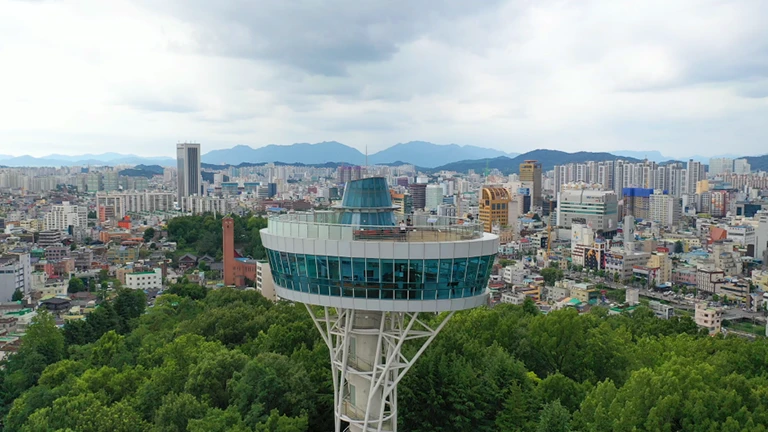
Sajik Park is a place of rest for citizens that embraces the passage of time, where the nostalgia felt by those remembering the old spaces blends harmoniously with the cultural sensibility presented by new spaces. In spring, when the cherry trees are in full bloom, it is widely known as a cherry blossom viewing spot in the heart of the city. The park is well landscaped with trees and flowers, and its popularity is further enhanced by more than ten poetry monuments erected as local landmarks. These monuments are engraved with poems by renowned historical and contemporary local poets, including Im Je, Song Sun, Park Bong-woo, Lee Su-bok, Yun Seon-do, Kim In-ryu, and Kim Deok-ryeong. Within the park are the restored Sajikdan Altar, the Gwangju Information & Content Agency, the Chunghontap Memorial Tower, Yeonpajeong Pavilion, and Gwandeokjeong Archery Range. While the former octagonal pavilion no longer exists, the Sajik Park Observatory has been newly built, offering panoramic views of central Gwangju.
Travel TimeApproximately 25 minutes by car
Jungoe Park
Jungoe Park is a popular urban neighborhood park where visitors can relax amid beautiful natural surroundings and enjoy a variety of amusement facilities. The park houses the Gwangju Museum of Art, the Gwangju Folk Museum, and the Gwangju Biennale Exhibition Hall, and also features playground facilities, making it crowded with visitors on weekends and holidays. It is particularly famous as a destination for autumn foliage. The Rainbow Bridge, installed at the gateway to Gwangju, serves as a symbol of the Biennale and is a well-known venue for the Gwangju Biennale and the World Kimchi Festival.
Travel TimeApproximately 20 minutes by car
Yangrim-dong History and Culture Village
Yangrim-dong was the gateway through which modern Western culture first entered Gwangju over 100 years ago. It is the birthplace of the Spirit of Gwangju, where a community history rooted in sacrifice and sharing began. The area boasts well-preserved Christian cultural heritage sites, as well as traditional cultural assets including the houses of Lee Jang-woo and Choe Seung-hyo. To ensure that these cultural resources are remembered and preserved by citizens aspiring to take a leap forward as a cultural hub city, the village serves as a local exploration program, where visitors can enjoy detailed and engaging stories and hands-on experiences guided by cultural tourism commentators.
Travel TimeApproximately 30 minutes by car
Gwangjuho Lake Ecological Park
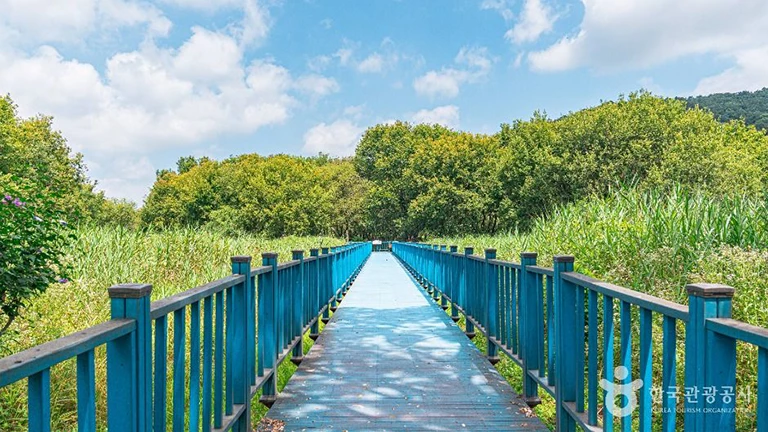
Gwangjuho Lake Ecological Park offers the feeling of being immersed in a painted landscape. Reed fields stretch endlessly along wooden walkways. The natural learning center, grass rest plaza, wildflower garden, and ecological pond are also beautiful. In the wetlands surrounding the lake, visitors can experience mudflats and reed marshes, while walking trails and wetland observation decks are installed near the flower gardens. The biotope is an ecological space where the habitats and movements of wildlife can be observed. Creatures such as frogs, toads, snails, leeches, water deer, roe deer, and otters can be spotted here. When gazing out over Gwangjuho Lake from the ecological park, a large rock comes into view. It is Nojaam Rock. Several stones around Nojaam Rock face toward us. These are dolmens that were excavated during the construction of Gwangju Lake. The stone waterway, which recreates the fishing platform (Jodae) of Hwanbyeokdang Pavilion, is also worth noting. Gwangjuho Lake Ecological Park serves both as a place of rest for citizens and as a site for nature observation.
Travel TimeApproximately 50 minutes by car
BookYou can close the reservation dialog box by pressing the ESC key.
KOREA (SIGNIEL BUSAN/LOTTE HOTELS(except WORLD, JEJU)/L7 by LOTTE HOTELS(except CHUNGJANG)/LOTTE CITY HOTELS, LOTTE ARAI RESORT)
4-12 years old
SIGNIEL SEOUL / LOTTE HOTEL WORLD / L7 CHUNGJANG by LOTTE HOTELS
0-12 years old
LOTTE HOTEL JEJU
4–12 years old (6th grade)
LOTTE HOTEL GUAM
0-11 years old
LOTTE HOTEL MOSCOW
6-12 years old
LOTTE HOTEL ST.PETERSBURG
7-12 years old
LOTTE HOTEL VLADIVOSTOK
0-6 years old
LOTTE HOTEL SAIGON
5-11 years old
LOTTE HOTEL HANOI / LOTTE HOTEL YANGON / L7 WEST LAKE HANOI by LOTTE HOTELS
6-11 years old
NEW YORKER HOTEL by LOTTE HOTELS
0-17 years old
Provide the best experience (Consent to use cookies)
The LOTTE HOTELS & RESORTS official website follows our cookie policy for convenience and personalized services.
You may agree to using cookies for an enhanced user experience, including analytics, targeted marketing, and relevance of content and advertising. For further information regarding the use of cookies, please check Manage Cookies.
Cookie Settings
Cookie Settings
Essential Cookies
It is necessary to enable the technical functions of the site and provide web services.
Based on your interests (site visits, usage patterns, product and service interests, etc.), we use your information to provide customized marketing promotions, event information and participation opportunities, and promotional information.